Why Choose Dr Peter Kim?
Epicanthoplasty Fees
A 50% discount applies if it is done on the same day as double eyelid surgery (as of 2026).
Reimbursed if you go ahead with surgery with us.
About Mongolian Fold Surgery
Up to 50% of Asians have medial epicanthal folds, also known as Mongolian folds, which distort the shape of Asian double eyelids. They make the eyes look smaller and give a “closed in” appearance. By removing the Mongolian fold, we can lengthen the width of the eyelids, and that will “open up” the eyes. This procedure is called Mongolian fold surgery, also known as medial epicanthoplasty.
Published Technique
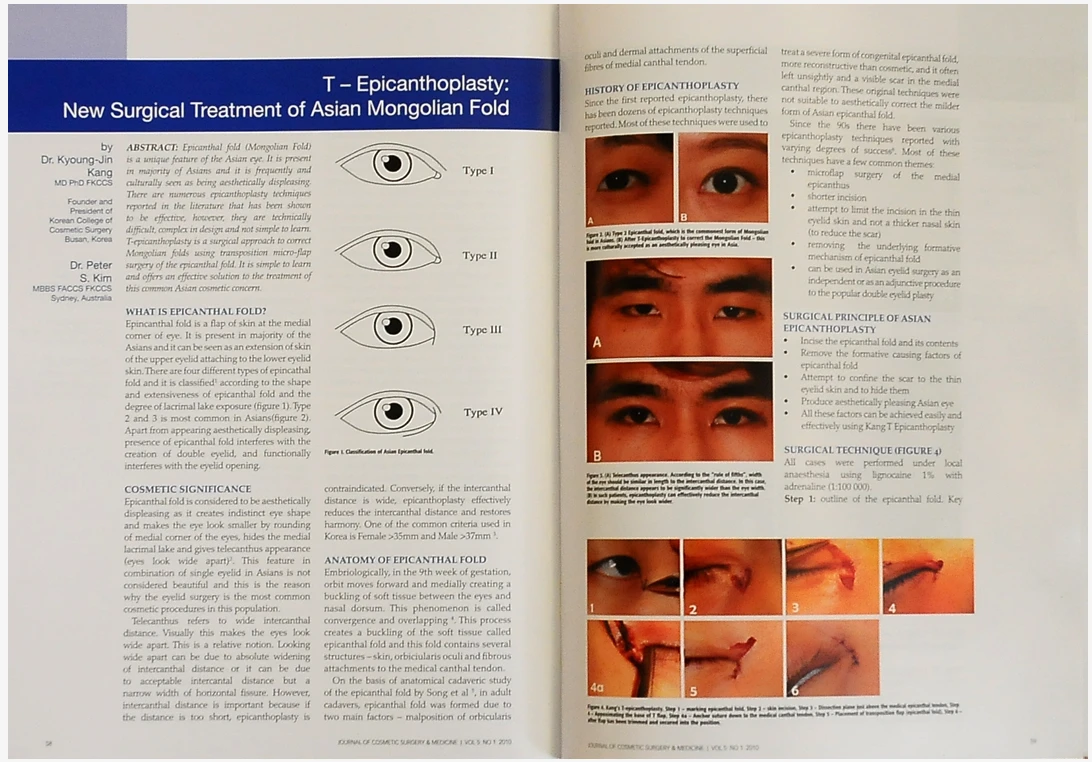
Dr Kim’s epicanthoplasty technique was published in the Australasian Journal of Cosmetic Surgery in 2010.
What Does the Procedure Involve?
The epicanthal fold is a flap of skin that sits in front of the inner corner of the eyelid. It blocks the inner corner of the eyelid and can make the eyes look squeezed or horizontally thin. In Asia, this fold of skin is called the Mongolian fold.
The technique to remove this fold comes from Dr Peter Kim’s 25-year history of practising skin and cosmetic surgery, especially skin flap surgery. His technique involves three simple steps:
1. Excise the skin flap.
2. Remove the underlying mechanism that caused the fold. This is the most important step, and one that is misunderstood by many surgeons.
3. Suture it in a way that is cosmetically appealing.
This is Dr Kim’s published technique. The procedure takes 15 minutes per side under local anaesthesia.
Case Study
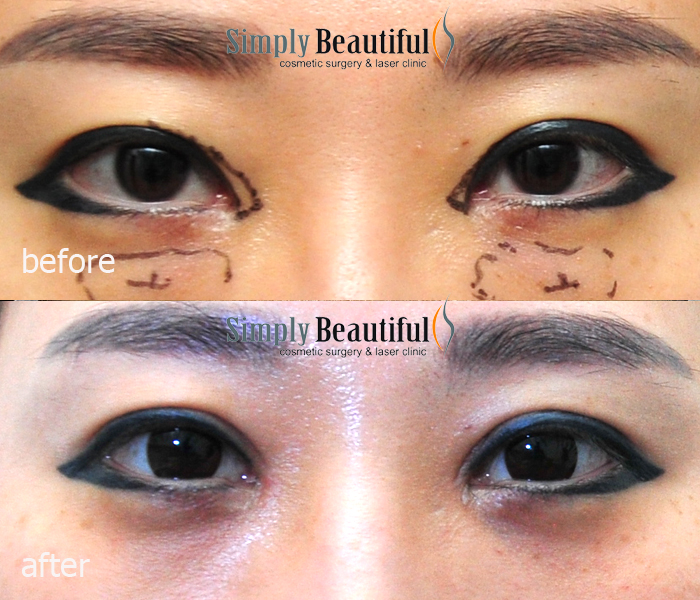
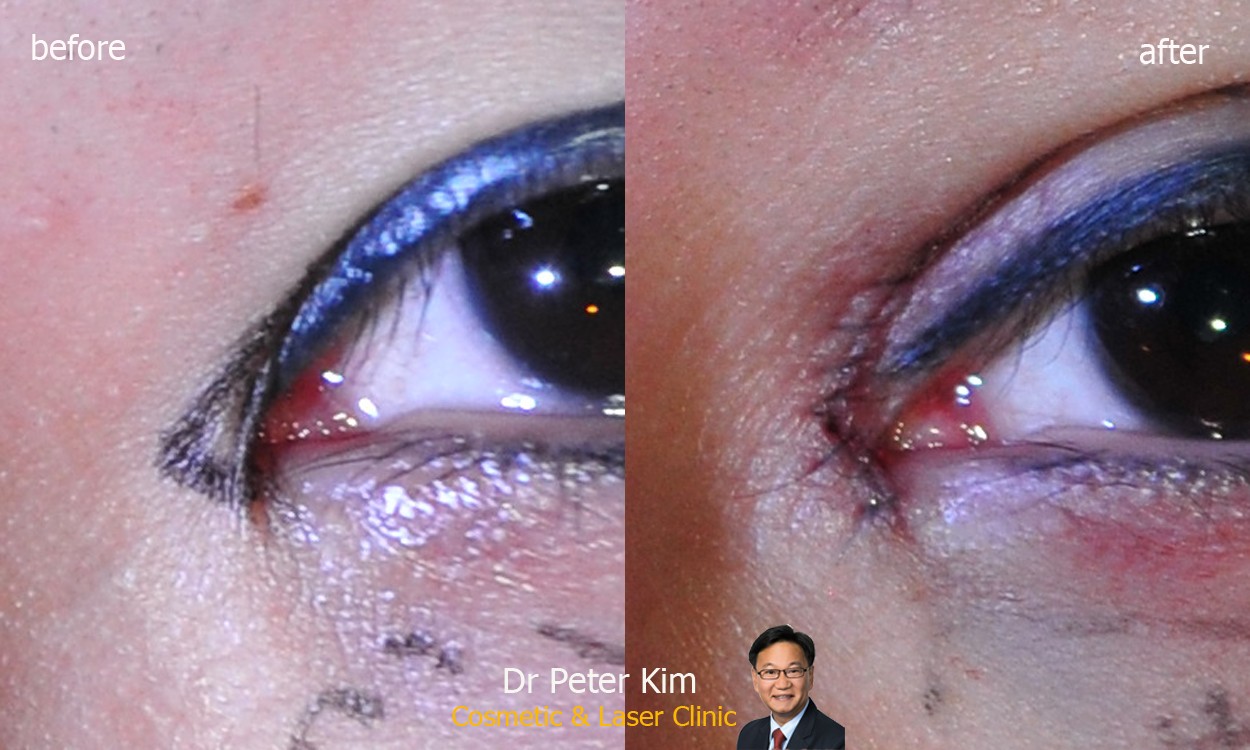
This patient had a small Mongolian fold, as shown by the markings in the photo before surgery. Removing the Mongolian fold gave her eyes a more “opened” look, and a small parallel-type double fold was what she desired. She had Mongolian fold surgery as an independent procedure, as she liked her natural double eyelids.
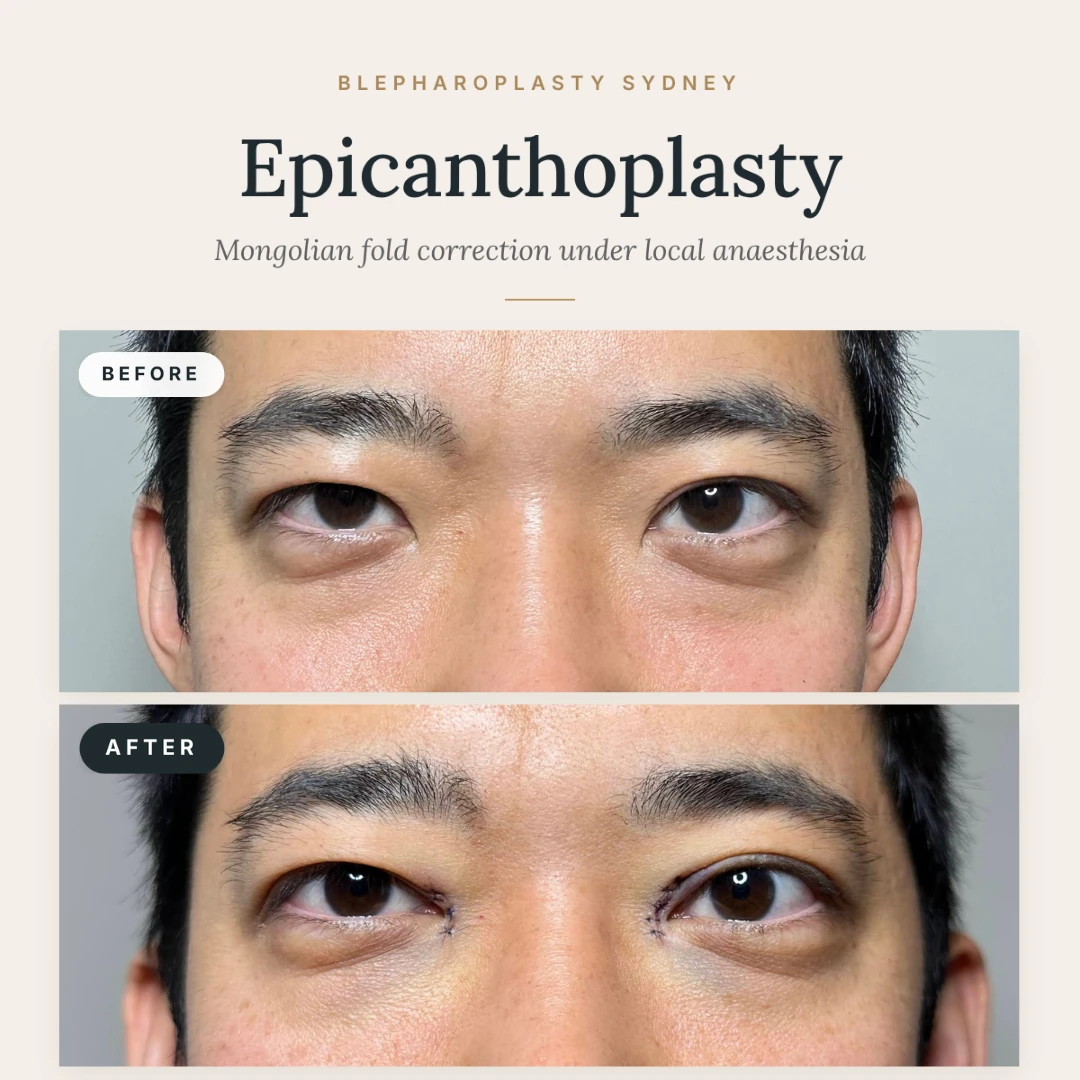
This patient was happy with the natural shape of his small double eyelids and only wanted his eyes to look wider. We corrected this by removing his epicanthal fold (Mongolian fold). It is a simple procedure that can be done under local anaesthesia. It is usually done in conjunction with double eyelid surgery, but can be done as a stand-alone procedure.
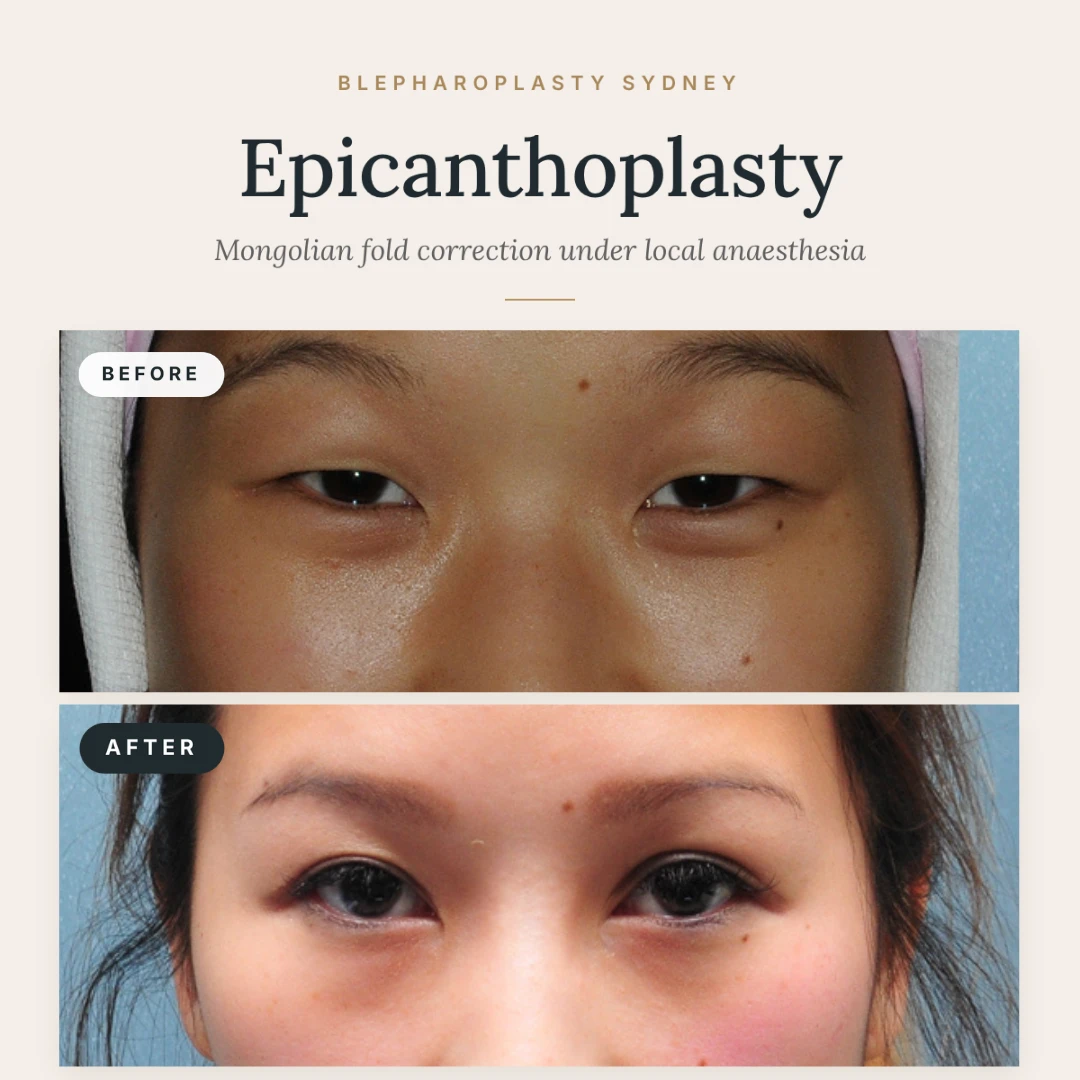
This patient had a Mongolian fold that was stopping the crease from forming an infold or outfold type. We performed double eyelid surgery and removed the Mongolian fold (epicanthoplasty) at the same time, under local anaesthesia.
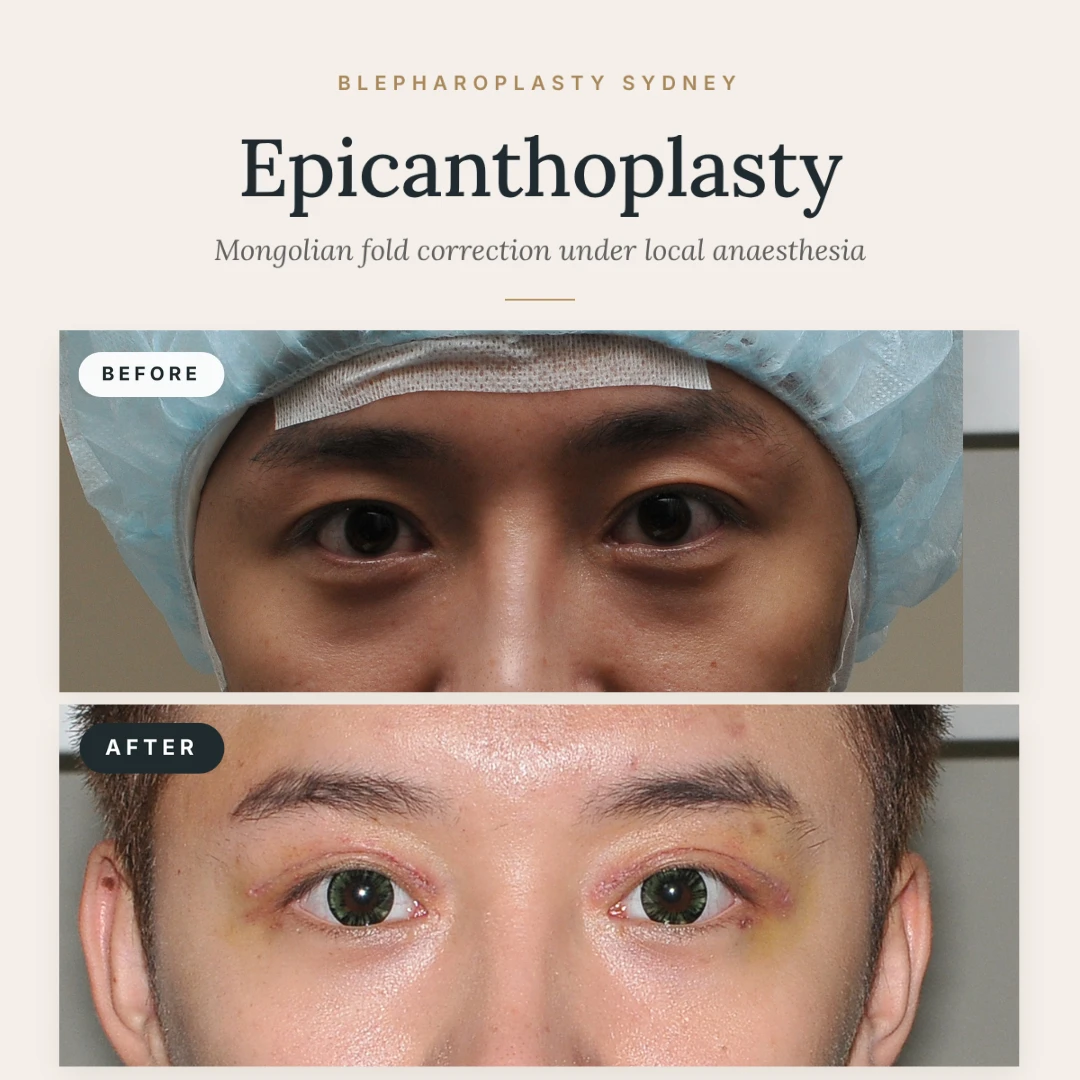
This patient had small double eyelids but wished for a parallel fold. His Mongolian fold was stopping the folds from becoming parallel in shape. The Mongolian fold was removed at the same time as his double eyelid surgery.
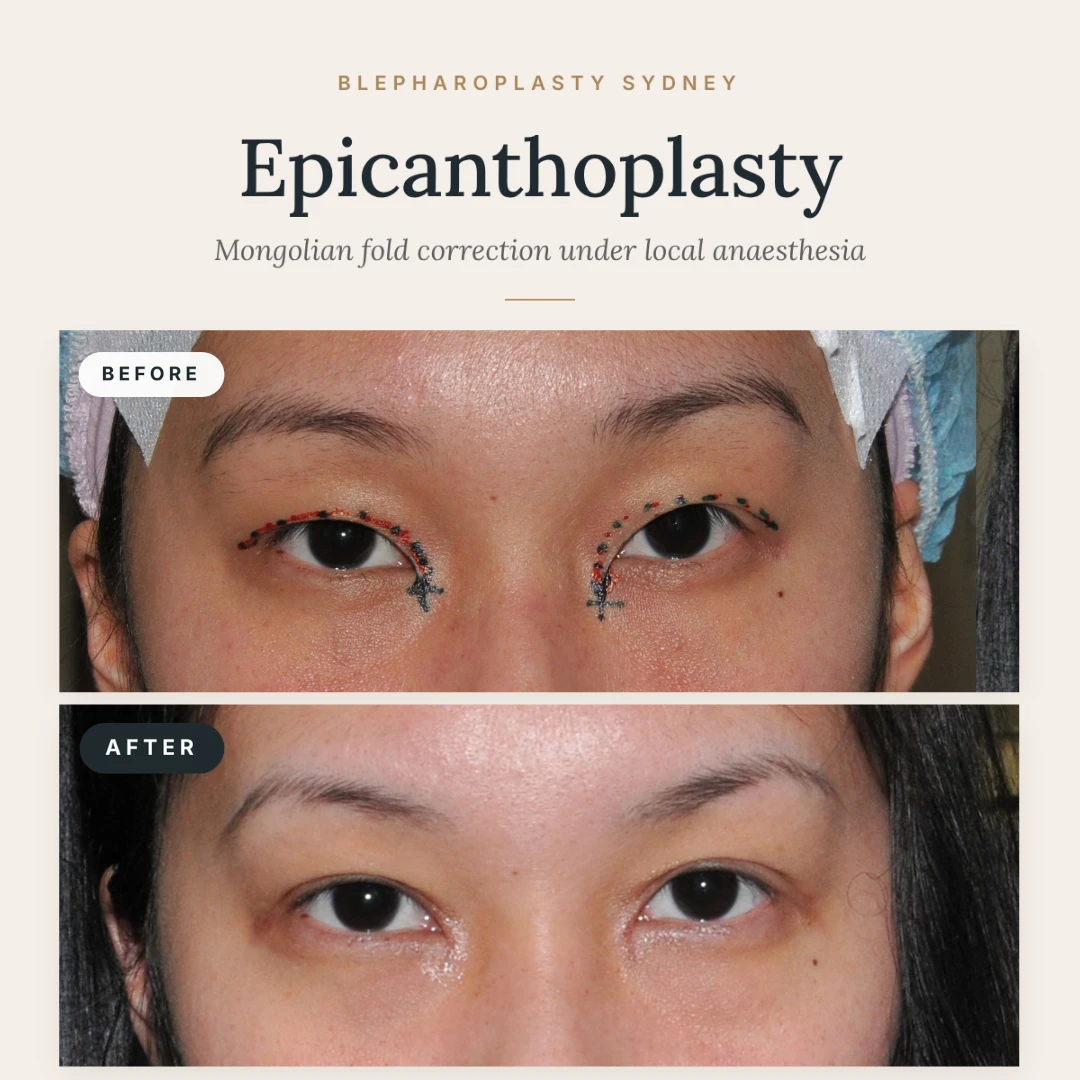
This patient had quite a large Mongolian fold and very small double eyelids (in-fold type). She wanted to correct the Mongolian fold and have a parallel fold. Double eyelid surgery and epicanthoplasty were performed at the same time under local anaesthesia.
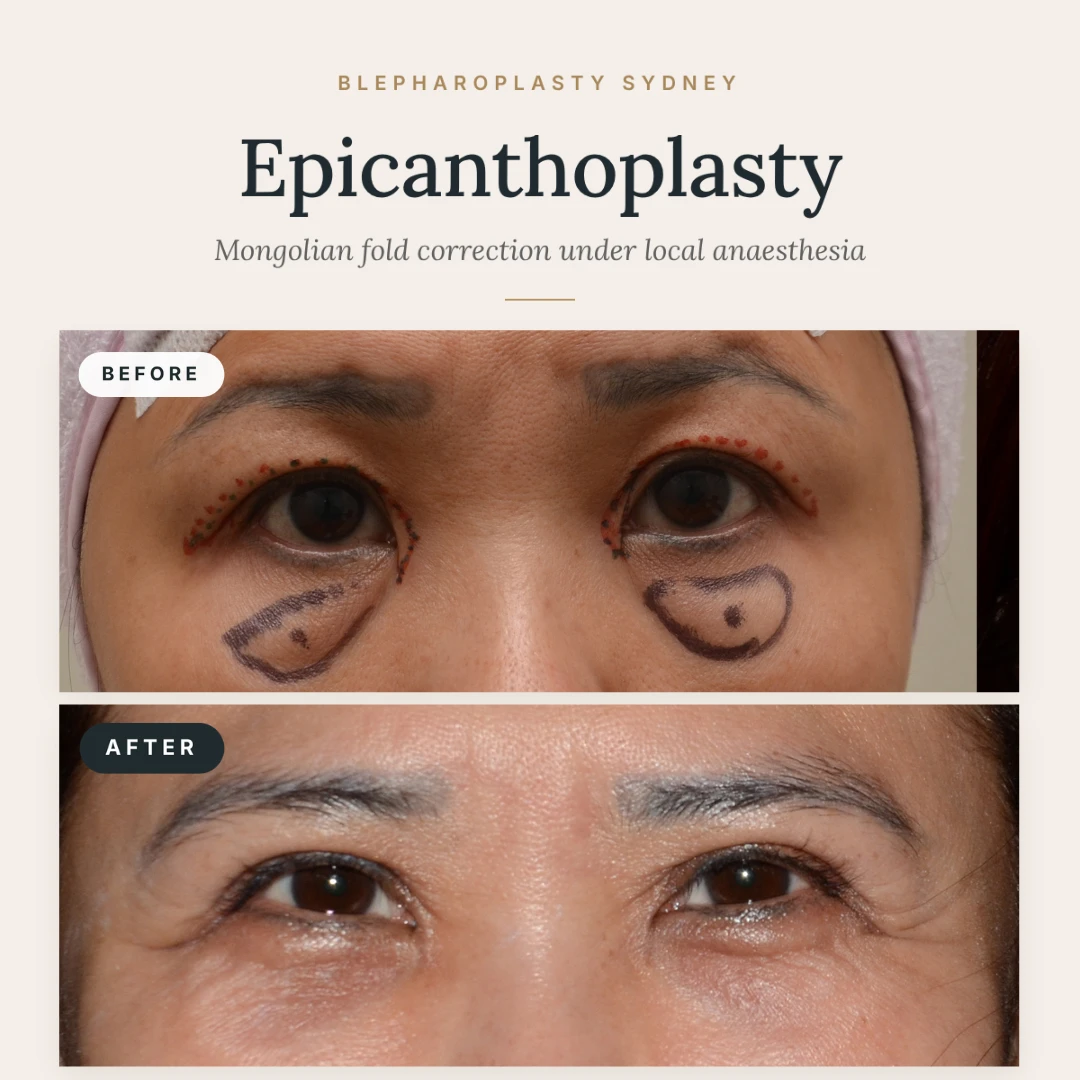
This patient had her Mongolian fold removed to create a parallel fold and to make her eyes look wider and more alert.
This patient had a monolid and a Mongolian fold. She wanted an outfold (parallel fold) and removal of the Mongolian fold. Double eyelid surgery and epicanthoplasty were performed under local anaesthesia. The overall shape is satisfying, achieving the desired outfold without the Mongolian fold. We love performing blepharoplasty on eyes of all ethnicities.
Scarring After Epicanthoplasty
The biggest concern following epicanthoplasty is visible scarring. Scars generally heal well and fade after 3 months. However, some scars don’t heal well and may need corrective treatments, and scars are more obvious if the Mongolian fold is larger.

Arrange a Consultation
A consultation with Dr Kim is required prior to any procedure to assess suitability, discuss risks and alternatives, and ensure expectations are realistic. Consultation locations: Chatswood & Cabramatta.